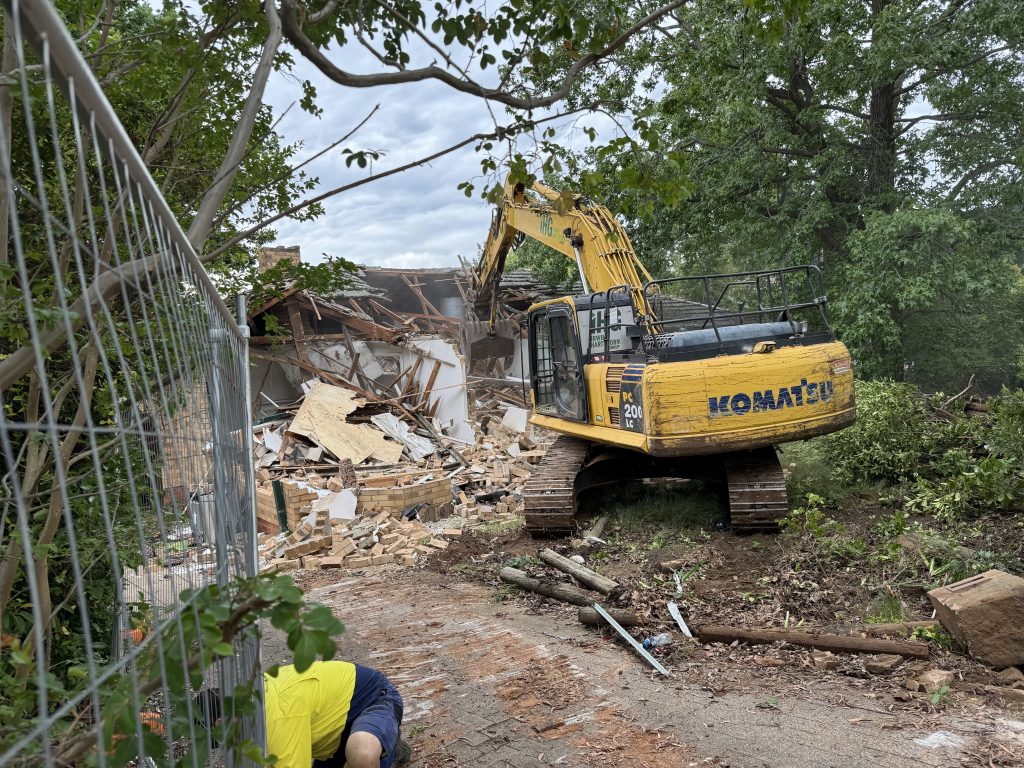
DRA has joined other residents associations in complaining that under the EPBC Act the Minister for Environment should have referred the North Curtin development to the new National Environment Protection Agency.  See the our response below.  MC26-005185 we received on 13 July 2026 from the National Environment Protection Agency and ours back to the Minister arguing that there is Commonwealth responsibility for referral of the Curtin Diplomatic Precinct under the EPBC Act

To minister.watt@dcceew.gov.au
Compliance of National Capital Authority with the Environment Protection and
Biodiversity Conservation Act 1999 (EPBC Act) Sections 18,19 and 68 for the Curtin Diplomatic Precinct
Dear Minister
The response of 13 July 2026 on your behalf by the National Environment Protection Agency ( MC26-005185) fails to acknowledge Commonwealth responsibility for referral of this matter under the EPBC Act. The response to our email of 27 May 2026 and states:

“I understand the agency has met with the Australian Capital Territory (ACT) Government about the proposed development, and am confident that the ACT Government are aware of their obligations as they relate to the EPBC Act.”
This response is inadequate for the following reasons:
1. The Australian Capital Territory (Planning and Land Management) Act 1988(Cth) section 10 provides for the National Capital Plan to set out detailed conditions of planning, design, and development in Designated Areas and to specify the priorities in carrying out planning, design, and development in Designated Areas.
2. The entire Diplomatic Precinct site (Figure 1) is a Designated Area under the National Capital Plan and the National Capital Authority is developing detailed conditions for the North Curtin Residential Area component, and adjacent areas, through its release of the draft Detailed Conditions of Planning Design and Development (DCPDD) on 5 April 2026.
3. The Curtin Diplomatic Precinct includes both National Land – the Diplomatic Estate component – which is managed by the Commonwealth, and ACT land, which is managed by the ACT Government. The draft DCPDD covers both National Land and ACT land (compare Figures 1 and 2).
4. The National Capital Authority, a Commonwealth entity, is thus the planning authority for the site of the proposed development and is responsible for public consultation, detailed conditions for planning, design, development and works approvals, as set out
in the National Capital Plan.
5. Consequently, the National Capital Authority, rather than the ACT Government, bears the responsibility for meeting the requirements of the EPBC Act.

We therefore request that you formally refer the Curtin Diplomatic Precinct areas of the North Curtin Residential Area and the adjacent Diplomatic Estate and Yarralumla Creek Area under s70 of the EPBC Act.
Your sincerely
Dr Diana Wright, President,
Yarralumla Residents Association
Info@YarralumlaResidents.org.au
Dr George Wilson, President,
Deakin Resident Association
info@deakinresidents.asn.au
Ian Elsum, President,
Curtin Residents Association
info@curtinresidents.asn.au
Colin Walters, Chair,
Inner South Canberra Community Councill
info@isccc.org.au
Nelson Tang, President,
Woden Valley Community Council
wodenvalleycommunitycouncil@gmail.com
Figure 1 Curtin Diplomatic Precinct
(from Explanatory Document – Draft North Curtin Residential Area – DCPDD Page 4)

Figure 2 Area covered by the draft Detailed Conditions of Planning Design and
Development (from Draft North Curtin Residential Area DCPDD Page 5)

22 July 2026

DRA met with Senator Pocock’s office and discussed the following 

  • Non-Compliance with Commonwealth legislation – PALM Act 1988, National Capital Plan, EPBC Act 1999
  • National Capital Authority – operational approach, capability, consultation
  • Complex & confused planning responsibilities – National Capita Authority & ACT Government
  • No integrated or holistic approach – information lacking disconnected or misleading
  • Approach disconnected from civil and social infrastructurebrequirements – Mint Interchange, community facilities and services
  • Not clear why National Capital Authority is Planning Authority for new high-density suburb that is not nationally significan

See also the attachments

A report in June 2026 discusses independent cost estimates by Smart Canberra Transport and
Australian Logistics Study Centre (ALSC) for ACT light rail Stages 1, 2A and 2B.

This review was prompted by the public announcement by Chief Minister Barr (7Mar26) that among other measures to rein-in capital expenditure on infrastructure, a decision on progress of Stage 2B would not be taken until after the 2028 ACT election. This decision followed the Eslake review of ACT finances, commissioned by the ACT Legislative Assembly, which, among other things, criticised the funds being spent on infrastructure instead of on more important projects for the community.

DRA has now received a reply from the ACT Government in response to the concerns we raised about the impact of Light Rail Stage 2B on the Parliamentary precinct.

We are pleased to note that the Minister’s letter addresses the issues we put forward. These were matters that we believe were overlooked in the draft Environmental Impact Statement (EIS). We will now examine the forthcoming final EIS closely to see whether those concerns have been properly recognised and addressed.

In his response, Minister Chris Steel acknowledges the national significance of the Parliamentary Zone and the importance of protecting its heritage and environmental values. He states that the project is being developed in accordance with the National Capital Plan and that environmental and heritage assessments are being undertaken through the EIS process. He also says that a landscape-led approach is being used to minimise impacts and integrate the project more sensitively with its surroundings.

The Minister notes that the draft EIS considered impacts on biodiversity, heritage, traffic and transport, and landscape character. According to the letter, the project adopts an approach of avoiding and minimising impacts wherever possible, particularly in sensitive areas such as the Parliamentary precinct. Where impacts cannot be avoided, the Government says it intends to rely on measures such as heritage management procedures, construction environmental controls, rehabilitation works, and replacement planting.

The letter also confirms that community feedback during public exhibition of the draft EIS has informed revisions to the final EIS. One of the changes now identified is a shift from median running to inner running south of Sydney Avenue until the transition onto Adelaide Avenue. The Minister says this arrangement was assessed in the draft EIS and that it has a comparable footprint to the previous option, with a similar extent of impact because the road corridor would still need to be widened.

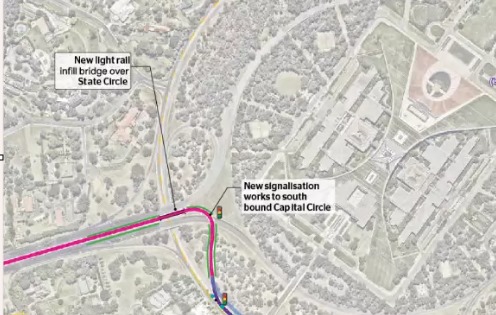
On traffic, the Minister acknowledges concerns about changes near Capital Circle and Adelaide Avenue. He says traffic signals at that intersection are considered necessary to integrate light rail safely with the existing road network and to address known safety issues. The letter further states that, while some changes to traffic conditions are expected, investigations indicate that average delays in peak periods are anticipated to be less than 10 seconds.

The Minister also states that Stage 2B remains a proposal and is still subject to assessment and determination under Commonwealth and ACT legislative processes. He says the final EIS will be made publicly available and that people who made submissions will be notified. The Government has also indicated that a comprehensive business case will be developed after planning approvals are completed and before any future investment decision is made.

DRA welcomes the fact that the Minister has directly addressed the concerns raised by residents. However, the key test will be whether the final EIS meaningfully reflects these issues and demonstrates that the heritage, landscape and environmental values of the Parliamentary precinct are being properly protected.

We will continue to review the material carefully as it becomes available and will keep residents informed.

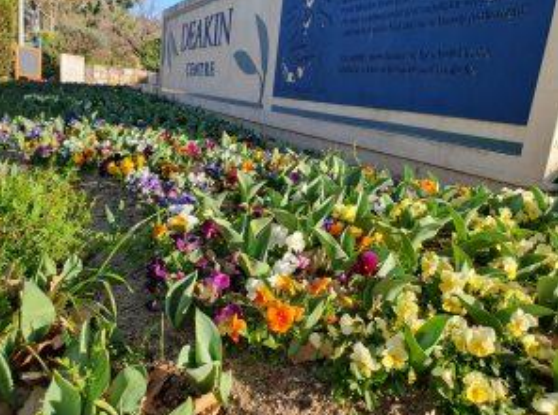
The Deakin Residents Association has received 1,600 Floriade bulbs for planting at the Deakin shops. The garden beds have been prepared, and we are ready for the main planting day.

Saturday 13 June
2:00 pm
Deakin Shops

Under the guidance of Jack and Jenny Gault, we will be planting the bulbs that will form this year’s spring display.

The 2023 display was widely admired and helped create a stronger sense of community in Deakin. Some photos of the 2023 display can be seen here: We hope this year’s planting will be equally successful.

If you can assist, please bring gardening gloves and a small hand trowel if you have one.

We have also been allocated annuals to plant between the bulbs. A second working bee has therefore been scheduled for Saturday 27 June, when we will plant the annuals and complete any remaining work.

To help with planning, please let us know if you expect to attend on either or both days.

The Deakin Residents Association invites residents and interested members of the public to join a second community walk to better understand the potential impacts of Light Rail Stage 2B on the Parliamentary Precinct.

While much public attention has focused on the proposed tunnel and “dog-leg” alignment on the eastern side of Parliament House, other aspects of the current proposal have received far less scrutiny. In particular, there are growing concerns about the proposed State Circle route on the western side of the Parliamentary Precinct.

The walk will include:

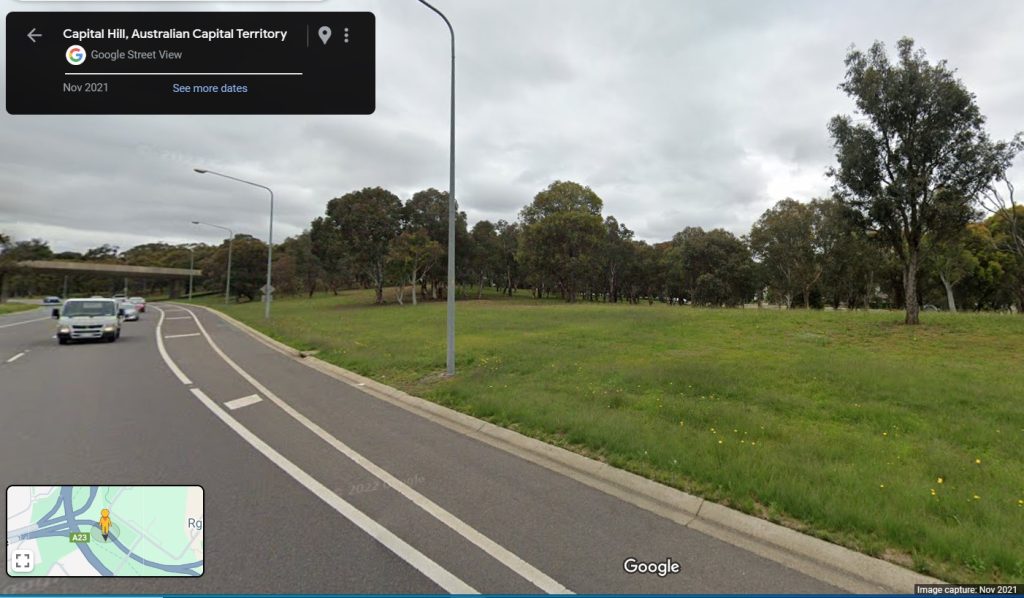
  • A shorter return route of approximately 1.5 km to the area proposed for traffic lights at the top of Adelaide Avenue and associated tree loss near The Lodge
  • An extended walk of approximately 3 km continuing around the Parliament House perimeter bushland

The DRA believes many Canberra residents remain unaware of the scale of the likely impacts. Participants in an earlier inspection walk were surprised to discover how much native bushland could be affected and the extent of bridge and engineering works likely to be required beneath Federation Mall and across State Circle.

Circle of bushland around Parliament House

Key concerns include:

  • Impacts on heritage and environmental values within the Parliamentary Precinct
  • Delays and increased travel times caused by traffic lights at the top of Adelaide Avenue and an additional set on State Circle
  • The loss of trees and native bushland opposite The Lodge
  • Damage to the circular bushland perimeter that was a defining feature of the original award-winning Parliament House design
  • Major construction disruption in one of Canberra’s most important national landscapes

Recent ACT Government statements have heightened these concerns. In particular, proposals for “an inner-running track between Sydney and Adelaide Avenues to keep light rail off median strips” raise questions about whether tracks would pass directly through the nationally significant bushland perimeter surrounding Parliament House.

That landscape was not accidental. The bushland ring around Parliament House was a central element of the original design concept, intended to visually connect Capital Hill with the surrounding landscape and frame the national institutions within a natural setting. Any substantial intrusion into this perimeter deserves careful public examination.

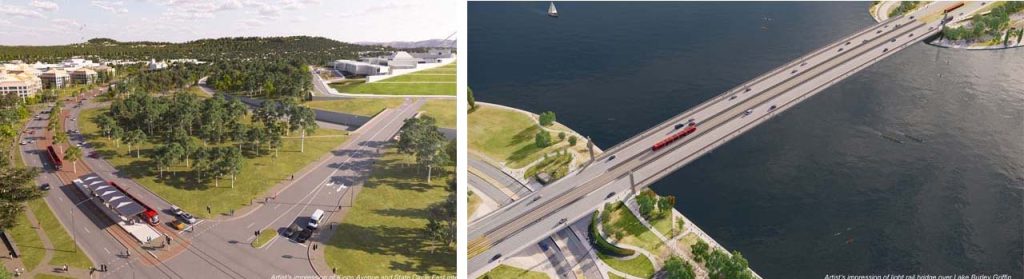
The financial implications are also becoming harder to ignore. Stage 2B may ultimately cost in the order of $5 billion or more, driven by tunnelling, bridge reconstruction, a Lake Burley Griffin crossing and extensive modifications to existing infrastructure. This is very different from Stage 1, which was largely constructed on flat ground with limited bridge works. Every extension beyond Commonwealth Park becomes progressively more difficult and expensive.

Route of Light Rail through Parliamentary bushland

The DRA strongly supports improved public transport and bikeways. However, we believe Canberra residents deserve a fuller understanding of the costs, impacts and alternatives before irreversible decisions are made about the Parliamentary Precinct.

The 2024 report 21st Century Public Transport Solutions for Canberra (available through the DRA website) examined a range of alternatives and questioned whether current technologies and travel patterns justify the enormous cost of Stage 2B. It also raised concerns about long-term ACT Government debt and whether emerging transport technologies — including fast door-to-door autonomous vehicles — may provide more flexible and cost-effective solutions.

In response to strong public interest, the DRA plans further inspection walks and hopes Federal and ACT politicians will attend. We would particularly welcome members of the Joint Standing Committee on the National Capital and External Territories, including Senator David Pocock and committee chair Alicia Payne MP. Senator Katy Gallagher and relevant ACT Ministers would also be welcome to inspect the site directly.

The Committee has the capacity to inquire into matters affecting the Parliamentary Zone and amendments to the National Capital Plan. The DRA believes the proposed route and its impacts warrant such an inquiry.

Residents interested in participating in future walks or encouraging the Joint Standing Committee to seek a mandate for an inquiry are invited to register through the Deakin Residents Association website.

We hope you can join us. Please let us know via the link.

Site of proposed lights on Adelaide Ave

Federal Golf Club and its retirement village operator partner Mbark are inviting the community to participate in consultation regarding a proposal to remove the concessional status from a 6.9 hectare section of the Federal Golf Course.

Community consultation will take place from 18 May to 18 June 2026.

Residents are encouraged to attend one of the upcoming information sessions where proposal materials will be presented and representatives from Federal Golf Club and Mbark will be available to answer questions.

Consultation Sessions

  • Online Session 1
    Tuesday 2 June 2026 – 6:30pm via Zoom
  • Public Forum
    Wednesday 3 June 2026 – 7:00pm
    Hosted by Woden Valley Community Council via Zoom
  • Online Session 2
    Thursday 4 June 2026 – 6:30pm via Zoom

Background information and plans relating to the proposal can be viewed at:
Active & Connected Consultation Website

To register your interest in attending a session, please email:
taniaparkes@taniaparkes.com.au
Please nominate which session you would like to attend and details will be sent to you.

Further Information

Community submissions can be made at any time during the consultation period by emailing:
community@fgc.com.au

Consultation closes on 18 June 2026.

For more information about Federal Golf Club visit:
Federal Golf Club

Alternatives to Light Rail Stages 1 and 2A were examined in the 2024 report 21st Century Public Transport Solutions for Canberra. At that time, the cost of Stage 2B was estimated at around $4 billion. DRA Vice President Dr John Bell, a co-author of the report, has since revisited those estimates.

Working with colleagues who have relevant engineering and infrastructure experience, the co-authors estimated the likely cost of Stage 2B by scaling up the per-metre construction costs of Stage 1 and adding allowances for major additional works such as bridges, culverts, utility relocations and other services. In several locations, existing bridges would need to be demolished and replaced. Estimates for new bridge construction were based on the costs of recently completed comparable structures. Additional allowances were also made for the engineering complexities associated with routing light rail around Parliament House and down Adelaide Avenue. The estimates included the cost of modifying trams to operate on batteries, as well as construction of the Woden tram/bus interchange.

Subsequent design changes have only increased the likely cost. For example, the proposed cut-and-cover tunnel from Commonwealth Avenue to State Circle alone could add more than $50 million and plus modification to bridges over Federation Mall. Even in 2024 there was considerable uncertainty about how costs would evolve over time. Since then, many construction costs have risen by more than 20 per cent.

Taking these changes into account, the likely cost of Stage 2B is now estimated to be around $5 billion. With the cost of Stage 2A already approaching $900 million, and likely to reach around $1 billion by completion, the combined cost of Stage 2A and 2B could therefore approach $6 billion.
The original 2024 report by Leon Arundell, John Bell, Kent Fitch, Russ Morison, Mike Quirk and Anthony Senti is available at 21st Century Public Transport Solutions for Canberra.

Deakin is growing, greening and getting active. This flyer brings together key updates and ways you can connect with your community throughout 2026.

Membership

Only a small percentage of Deakin residents are DRA members or on our mailing list. Help us grow by:

• Assisting with our upcoming letterbox drop.

• Encouraging your neighbors to join DRA.

Join the DRA Committee or Subcommittees

We’re actively seeking enthusiastic members, especially younger residents, to join our committee or subcommittees. If any of the issues above resonate with you, we’d love your involvement!

Social Media

DRA has a website, Facebook and Instagram pages. We need your help to create engaging content and grow our online presence. If you’re social media savvy, please contact George Wilson at president@deakinresidents.asn.au.

Questions, Queries or Feedback?

We’re here to help — contact secretary@deakin.asn.au

Annual Subscriptions

DRA’s annual membership subscription of $30

If you pay now in FY 2025-26 we will roll it over for 2026–27. Please support our efforts as all money goes back into the DRA inititives.

[Follow link to make a payment]

The Deakin Residents Association invites you to join a community walk to better understand the potential impacts of Light Rail Stage 2B on the Parliamentary Precinct.
Date: Sunday 26 April,
Starting point: Surveyors Hut. 10:00 am

(limited parking, with overflow in Forster Drive)

The walk will offer:

  • a shorter return route of approximately 1.5 km to the area proposed for traffic lights at the top of Adelaide Avenue and associated tree loss near The Lodge
  • an extended walk of approximately 3 km continuing around the Parliament House perimeter bushland

While there has been considerable attention on constraints along the eastern alignment, other aspects of the current proposal have received little scrutiny. There are concerns about the State Circle route, including impacts on:

  • heritage and environment values within the Parliamentary Precinct
  • potential increases in travel time
  • delays due to traffic lights at the top of Adelaide Avenue and an additional set on State Circle
  • the loss of trees and native bushland opposite The Lodge
    • damage to the circular bush perimeter that was a defining feature of the original design winning competitor

This walk will provide an opportunity to view these areas on the ground and to discuss the implications as planning progresses.

We hope you can join us. Please let us know via the link.

Site of proposed lights on Adelaide Ave